Check Back Soon!

Recently Updated March 11 2024 Allan Lonsberry 107 Timber Wolf Battalion
Showing posts with label Drain Thomas 195727. Show all posts

Tuesday, 8 December 2015

Drain Thomas 195727

Thomas Drain  195727

Thomas Drain was born in Dummer Township on April 01 1889 to John and Elizabeth Drain. He was one of 11 children in the family.  The family lived in Clarina, the northern part of the township.  It seems the Drains packed up and moved slightly north of Dummer, to the township of Burleigh-Anstruther to farm around 1901.  The area is fairly rocky and not greatly suited to farming, and the Drains had returned to the Stoney Lake area in Dummer by 1911. 
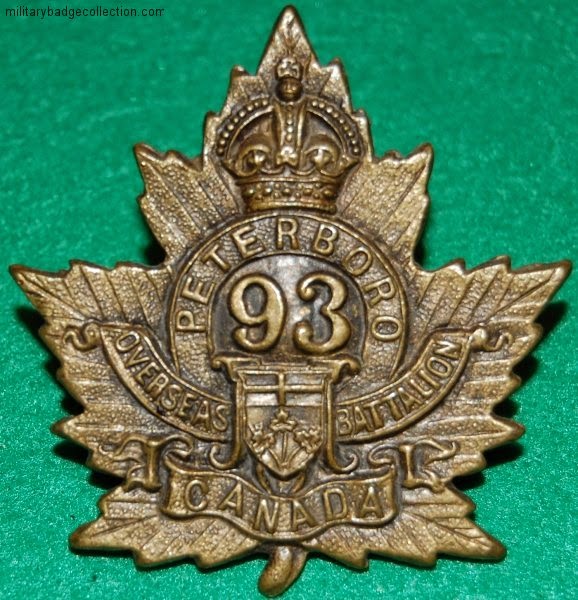
Thomas attested into the 93rd Battalion in Peterborough on February 9th 1916.  He was only 27 years old, weighed 141 pounds, and stood 5 foot 8 ½ inches tall.  He had a fresh complexion, blue eyes and light brown hair. He was single, Methodist and listed his occupation as a lumberman.  He had no previous military experience. He passed the medical inspection of the 93rd Battalion medical officer, though it was noted he had previously lost the “terminal joint on the second finger of his left hand.

Thomas spent the next four months in Peterborough training and drilling with the 93rd Battalion until May 30, 1916, when they left  for Barriefield Training Camp, in Kingston.  They received further training there until they left for Halifax on July 15 1916, and there boarded the S.S. Empress of Britain for overseas.   The 93rd arrived in England on the 25th of July and was directed to Otterpool Camp for further instruction.  There the Peterborough Battalion learned the dismal fate that it was to be broken up and its ranks used to reinforce other battalions already fighting at the front.  Pte. Drain was transferred to the 39th Reserve Battalion at West Sandling Camp to await further notice as to joining a front line battalion.  He was posted to the 21st Battalion and joined them in France on October 28, 1916. He served at the front with that unit until he entered No.22 General Hospital at Camiers on January 18 1917 with a gunshot wound to his shoulder and neck. He was transferred to the Military Hospital in London 5 days later.  While there he wrote home to his mother, on Stoney Lake.

                                                        C. Ward.
                                                        Endell St. Hospital,
                                                        London
Dear Mother,- Just a few lines to say I am in hospital and getting on fine. I have got my left shoulder hurt and am grand. This is the best place I have struck yet. Don’t think that because I am very much alive. I am in London. I expect to be in here quite a while. I like it a lot better than I do France. You might excuse the short letter as I am pretty sleepy.  They even bring my meals to me in bed. I came in the hospital on the 25th. When I can get three months’ leave I shall come over and see you, but I don’t think I shall. That cake that you sent I never got, but I had a good feed of turkey and rum to match it.  I guess I will close. Best wishes to all.-Thomas.”

 He recovered sufficiently enough to be moved to rest at the Canadian Casualty Assembly Centre (C.C.A.C) at Shoreham at the Sea.

Drain was sent to the Canadian Infantry Brigade Depot, still in England, on June 6th and was taken back into the 21st Battalion. It was most likely around this time that he wrote this letter home to his sister, Mrs. M. McIlmoyle of Young’s Point:

“I received your two post cards and letter. Was glad to hear that you are well, and your letter found me the same.
I am back to duty again. My wound is all healed up nicely, and I am able to work again. I had my ten days’ leave in London and had a fine time. I expect I will have to go to France again, but I do not know just when. I expect to be training here for a month or so yet.”

Surprisingly, 3 days later he was admitted to No. 51General Hospital with V.D.G., or venereal disease gonorrhoea, spending from July 25 to November 10, 1917. He was moved for treatment to No.4 Stationary Hospital. He would spend the next year in assortment of hospitals and convalescences with various diagnoses of venereal disease including syphilis and penile ulcers.  He returned to the 21st Battalion on March 15 1918. He would spend less than 3 months at the front until he was admitted to No.6 Canadian Field Hospital complaining of severe abdominal pains. He was sent to No. 43 Canadian Casualty Clearing Station on the 21st of May and to No.11 Stationary Hospital on the 23rd, where an exploratory incision was made thinking that it might be gall stones.  Doctors noted some adhesions around his gall bladder and removed his appendix.  His diagnosis was later described as having hepatitis.
He was invalided to the Eastern Ontario regimental Depot in Seaford, England on June 23rd, 1918. Pte. Drain spent the duration of the war in the Canadian Casualty Clearing Depots No.3 and No.1 in Buxton, England.


An excerpt from the proceedings of the Discharge Board

He embarked for Canada on the S.S. Tunisian on December 23, 1918. The Peterborough Examiner announced that he had arrived in the city on January 4th 1919.   Records show that Pte. Drain entered the Casualty Company No.3 District Depot in Kingston on June 5th 1919. During his final hearing in front of the discharge board it was noted that Pte. Drain was robust and well developed and had no disability, but did complain of tenderness of in the 5 inch scar that he received during his appendectomy during the war.  He received a 10% disability pension for his injuries and was discharged on February 03, 1919. 
 
Thomas Drain died on September 21 1962, he is buried in St. Mark’s Cemetery in Warsaw, Ontario.

Sources:
Library and Archives Canada. 1901 Census of Canada. Census Place: Burleigh & Anstruther, Peterborough East, Ontario, Page 5, Family no.45.
Library and Archives Canada. 1911 Census of Canada.  RG 31-C-1; Folder Number 81, Census Place 22: Dummer Township, Peterborough East, Ontario. Family No. 64. Page 07.
Library and Archives Canada. 1891 Census of Canada.  Census Place: Dummer, Peterborough East, Ontario. Roll T-6363; Family No. 65.
Library and Archives Canada. 1921 Census of Canada.  Census Place: Dummer (Township), Peterborough East, Ontario. Series RG31. Statistics Canada Fonds. Page 2
Library and Archives Canada online.  The Complete Military Service File of Thomas Drain.  Accessed November 27 2015.  RG 150, Accession 1992-93/166, Box 4930-35. <www.bac-lac.gc.ca>
Peterborough Evening Examiner. “Today’s Military News”.  March 12 1917. P.5,11
Peterborough Evening Examiner. “Today’s Military News Continued”.  June 02 1917. P.19
Peterborough Evening Examiner. “Pte. Drain Arrives Home”.  January 04 1919.Pg.4

Drain Lewis John 195729


Lewis John Drain  195729

Lewis John Drain was born on July 13 1893 in Clarina, in the northern portion of Dummer Township.  His father was James Drain, who was a labourer, and his mother was Jane Anne “Jenny” Robinson.  Lewis was the oldest of three children in the family, his brother being Thomas James (1896-1902) and sister, Sarah Jane (1892-1958)

Lewis was nearly 23 years of age when he enlisted in the 93rd Battalion on February 8th 1916. At the time he was single, had no previous military experience and was employed as a lumberman. He stood 5 feet 3 inches tall and was 124 pounds.  He had a fresh complexion, blue eyes and light brown hair.  He listed his religion as Methodist.  At the time of enlistment, Lewis declared that his parents were aged and that he was their sole means of support.

Click Here to Access Full Service File
Lewis trained with the 93rd Battalion at Barriefield, Kingston until he disembarked entrained for Halifax and disembarked there on June 15 1916 aboard the S.S. Empress of Britain.  Ten days later he arrived safely at the docks of Liverpool England.  He and the rest of the Battalion were stationed at Otterpool Camp for further training.  A month after arriving Drain entered the Hospital at Otterpool camp August 27 1916.  His ailment must have been slight as he was discharged the very same day.  While at Otterpool Camp, the 93rd Battalion learned that they were to be eventually to be broken up and leave as drafts to join other existing Canadian battalions already at the front in France.  Pte. Lewis Drain was among a draft of 93rd men that were to join the
18th Canadian Infantry Battalion.  He left the 93rd on September 16 1916 and was sent to Canadian Base Depot in France.  He joined the 18th Battalion in the field on October 03 1916.  Just in time to take part in the heavy fighting of the Somme offensive and that attack on Courcellette.

Drain made it through unscathed, through regular rotations through the trenches in the fall and winter of 1916.  He took sick on Feb 03 1917, and entered No.5 Canadian Field Ambulance with laryngitis.  There he stayed 6 days until he was discharged to duty on February 09.  He did not seem to recover though as he returned to  No.5 Canadian Field ambulance on February 21 with more severe symptoms of laryngitis.  This time his condition warranted a transfer to No. 8 British Red Cross Hospital in Le Touquet on March 14 and then he was shipped across the channel to the Norfolk War Hospital in Norwich on the 23rd of March 1917.  There he convalesced until April 17th when he was returned to the Casualty Clearing Depot at Epsom until the 22nd of June.  At this time he was sent to the 4th Canadian Reserve Battalion at Bramshott Camp, England.  He eventually proceeded overseas to the 18th Battalion in France on November 29 1917.

After a short stay with the Canadian Corps Relief Camp, Drain rejoined the 18th Battalion in the field on December 11, 1917.  His laryngitis had resulted in him missing the costly actions of Vimy Ridge and Passchendaele.  He would have been part of the reinforcements, both new recruits and returning veterans, who joined the shattered battalion over the winter of 1918 after it was shattered in the Passchendaele campaign.  The battalion would have trained and prepared for the upcoming costly offensives that would begin in the summer of 1918. 

Drain entered No.6 Stationary Hospital on May 22 1918, with P.U.O. or “trench fever”.   He was stable enough to be transferred to No.11 Convalescent Depot to recuperate from his illness on June 02 1918.  After close to a month there he was discharged to the Canadian Infantry Brigade Depot July 4th in the first step to rejoin his battalion at the front.  Making his way ever closer to the trenches he arrived at Canadian Corps. Reinforcement Camp on July 14 and, for unknown reasons, joined the 8th Battalion in the field that day, being taken off strength of the 18th.

He served about a month with the 8th Battalion in the Arras sector, and was most likely with them during the major Battle of Amiens.  Though the battle resulted in many casualties among the Canadian troops, Drain came through unhurt.  He left the 8th Battalion on August 15th after the battle had ended. He bounced around the rear reserve camps for about a month until he rejoined his old battalion, the 18th on September 10th 1918.

Drain would have seen heavy fighting as he rejoined his unit and fought in the last offensive actions against the Germans in the last 3 months of the war, known as the Last Hundred Days.  This last push to victory was responsible for the highest casualty rates for Canadians during the war, as over 45,000 Canadians were casualties in the last 96 days of the war.

Pte. Lewis Drain, however, came though physically unscathed.  The War ended on November 11th 1918.  Almost immediately the Canadian troops began reshuffling and moving towards demobilizing and the journey home.   Drain left the front lines and his battalion to join the 2nd Canadian Division Entrenching Company, a reserve unit in the rear, on November 16 1918.  He then made his way to the Canadian Infantry Brigade Depot on the 29th of the same month.  He bounced around a bit in Canadian reserve camps in France before being transferred to England and posted at Witley Camp on January 11th, 1919.  At Witley he was officially taken on strength to 4th the Reserve Battalion, and on January 28th transferred to Western Ontario Regimental Depot.
By February 10th 1919, he was later transferred to Wing #3 at the Canadian base at Kimmel Park, North Wales. There, he was given clearance to depart for Canada on the 22nd of that month.  He sailed out of Liverpool the next day on the H.M.T. Belgic and arrived in Canada on March 2nd 1919.  He returned to Ontario and went before the demobilization Board at Barriefield Camp, Kingston on March 20th.  He was discharged in good health and no complaints.

Lewis Drain returned to Dummer Township after the war.  He married Frances “Fanny” Andrews of Dummer in Norwood on April 19 1922.  The couple resided at Lot 4, Concession 6 of Dummer Township after the marriage and had one daughter, June Marie (1927).  Lewis Drain is buried in Maple Grove Cemetery in Havelock, Ontario.

Sources:
Archives of Ontario. Canada Births, 1869-1913. Series: MS929, Reel 128
Archives of Ontario. Registrations of Marriages, 1801-1928. Toronto, Canada. Archives of Ontario. Series MS932, Reel 622.
Library and Archives Canada online.  The Complete Military Service File of Lewis John Drain.  Accessed November 27 2015.  RG 150, Accession 1992-93/166, Box 4930-35. <www.bac-lac.gc.ca>
Library and Archives Canada. 1901 Census of Canada. Census Place: Dummer, Peterborough East, Ontario, Page 3, Family no.27.

Library and Archives Canada. 1911 Census of Canada.  RG 31-C-1; Folder Number 81, Census Place: Dummer Township, Peterborough East, Ontario. Family No. 76. Page 08.